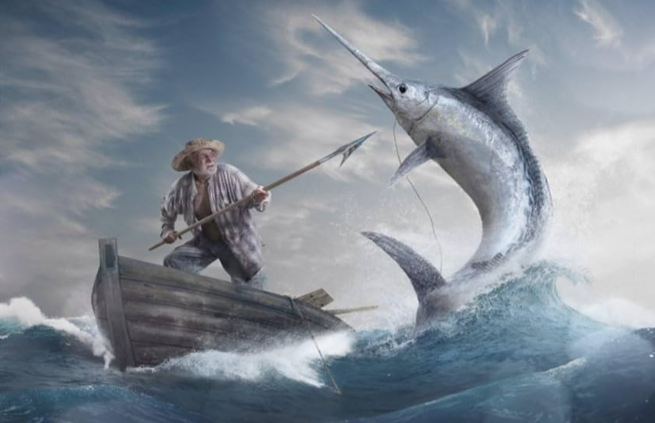
Seang is Seeing
By Don YU
In nature Seeing in the Ocean
Elaborated Seaing in the Ocean
In nurture Seeing in the Seaing
Enlightened Seaing is Seeing
A Literary Review on “Seang is Seeing” by Don YU
“A profound linguistic canvas that mirrors Santiago’s spiritual journey in The Old Man and the Sea.”
The Core Concept: The Poetic Wordplay of “Seaing” and “Seeing”
The title and the central thesis, “Seaing is Seeing,” is a brilliant linguistic invention.
By blending the word “Sea” (the physical vastness where the old man, Santiago, fights) with “Seeing” (spiritual vision, enlightenment), the poet suggests that to truly exist and endure in the ocean (“Seaing”) is the only path to achieving ultimate truth (“Seeing”).
It beautifully echoes Santiago’s realization that the Marlin and the sharks are not just creatures, but brothers and mirrors of his own soul.
Stanza-by-Stanza Literary Analysis
Line 1: “In nature Seeing in the Ocean”
This opens with the objective world. In the raw state of nature, we look outward. The “Ocean” represents the grand, untamed universe where humans observe the struggle for survival with our physical eyes (Seeing).
Line 2: “Elaborated Seaing in the Ocean”
Here, the poet elevates the experience. “Seaing” becomes a verb of active endurance. Santiago doesn’t just sail; his entire being becomes intertwined with the ocean through “elaborated” (highly disciplined, long-suffering) labor.
Line 3: “In nurture Seeing in the Seaing”
This line marks the internal transformation. “Nurture” implies growth, wisdom, and the internal processing of pain. Through the grueling act of surviving the sea (Seaing), a deeper, nurtured wisdom (Seeing) is born within the old man.
Line 4: “Enlightened Seaing is Seeing”
The climax of the poem. Santiago returns to Havana with nothing but a skeleton of the fish, seemingly defeated. Yet, he is “Enlightened.” He has learned that his struggle on the sea (Seaing) has granted him a vision of dignity and transcendence (Seeing) that no one can take away.
Conclusion & Overall Impression
Don YU’s poem is minimalist yet monumental. It operates like a Zen koan. With just a handful of recurring words, it captures the 120-page struggle of The Old Man and the Sea. It transitions flawlessly from Nature to Nurture, and from Physical Endurance to Spiritual Enlightenment. It is a deeply thoughtful and beautifully crafted piece of literature.